












































Ceilings are often the part of the house whose color is least considered, even though choosing the right color can affect the impression of height, spaciousness, and comfort in a room. A ceiling color that harmonizes with the room's concept will make the home's appearance feel more cohesive, while a less appropriate choice can actually make a room feel cramped or unbalanced with the other elements around it.
So far, white has been the most common choice because it is considered safe and easy to pair. However, the principle behind it actually relates to how color reflects light. Light colors reflect more light than dark colors, thus helping determine how bright and spacious a room feels.
Here are recommendations for good ceiling paint colors for various rooms in the house, along with tips for choosing paint that is comfortable to apply to overhead surfaces.
The Effect of Ceiling Color on the Impression of a Room
Ceiling color plays a major role in shaping the visual perception of a room, because the ceiling is the widest plane within view that is not blocked by furniture. Light colors such as white or cream tend to make the ceiling feel higher and the room feel more spacious, because these colors reflect both natural light and lamp light better than dark colors.
Conversely, darker colors absorb more light, thereby reducing the visual impression of ceiling height. Even so, this is not always a drawback. In rooms with sufficiently high ceilings, dark colors can actually create a warmer and more intimate atmosphere, making the room feel more “grounded” and comfortable for relaxing.
Ceiling Paint Color Recommendations According to Room Type
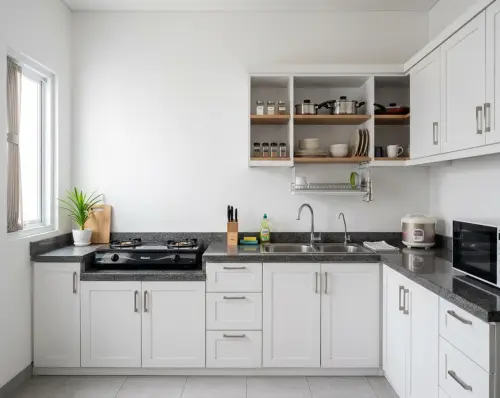
Each color can give a different character to a kitchen. Besides considering taste, also pay attention to the size of the room, the amount of light entering, and the color of the cabinets and other kitchen elements so that the result remains harmonious.
1. Living Room
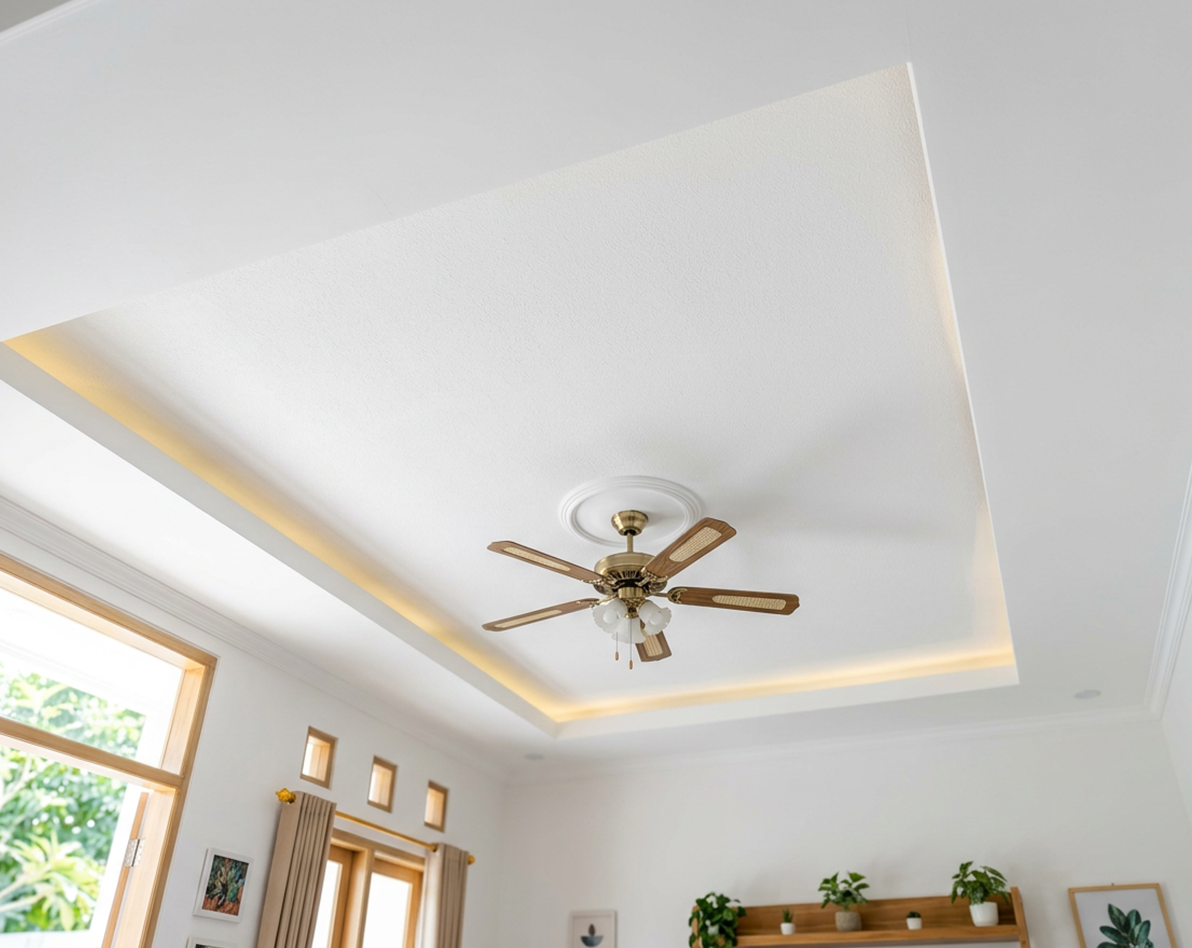
For the living room, white or off-white is still the safest choice because it gives a clean, spacious impression and is easy to pair with various furniture styles and wall color schemes. This color also helps reflect light from windows or the main lamp so that the living room feels brighter throughout the day, while also giving a welcoming impression to visiting guests.
2. Bedroom
The bedroom can use a warmer ceiling color, such as white or light beige, to create a calming atmosphere before sleep. These colors can reflect light quite well, yet still provide a soft nuance, making them suitable for a room used as a place to rest.
3. Kitchen
The kitchen should use a bright ceiling color, such as pure white, so that the room looks hygienic and makes it easier to check the cleanliness of the cooking area, including smoke or oil stains that may stick to the ceiling over time due to daily cooking activities.
4. Bathroom
White or light gray is suitable for bathroom ceilings because it gives a clean impression and can disguise traces of moisture that may appear on the surface due to water vapor from bathing activities. Light colors in this area also make it easier for residents to recognize signs of seepage early on.
When Can You Use Colors Other Than White on the Ceiling?
Colors other than white can be used on the ceiling if the room height is spacious enough or when you want to create a more personal impression in a room, for example in a family room, home office, or child's bedroom. Some interior designers even deliberately use accent colors on the ceiling as a focal point of the room, especially if the surrounding walls use neutral colors.
As a guideline, the darker the color chosen, the more important it is to ensure the room's lighting remains adequate so that the ceiling does not look too heavy or oppressive. Combine with additional lighting such as spotlights or pendant lamps if you still want to use a darker ceiling color in a room with a standard ceiling height.
Tips for Choosing the Right Ceiling Paint
1. Pay Attention to the Gloss Level
Choose paint with a matt or doff gloss level for the ceiling, because a surface that does not reflect too much light will disguise small imperfections on the ceiling, such as gypsum joint marks or panel seams.
2. Choose a Low-Spatter Formula
Since the painting position is overhead, choose paint with a low-spatter formula so that the application process is more comfortable and does not dirty the floor or furniture below.
3. Match with the Room's Lighting
Test the ceiling color on a small sample first under the room's actual lighting, because the same color can look different under natural light compared to lamp light at night.

Avitex TOP for a Clean and Tidy Ceiling
Avitex TOP is available as a ceiling paint option with a clean white color that is easy to pair with various room color schemes. This product has been certified Green Label Singapore, which indicates that its formula meets internationally recognized environmentally friendly standards.
Suggested image: kemasan Avitex TOP dari Avian Brands
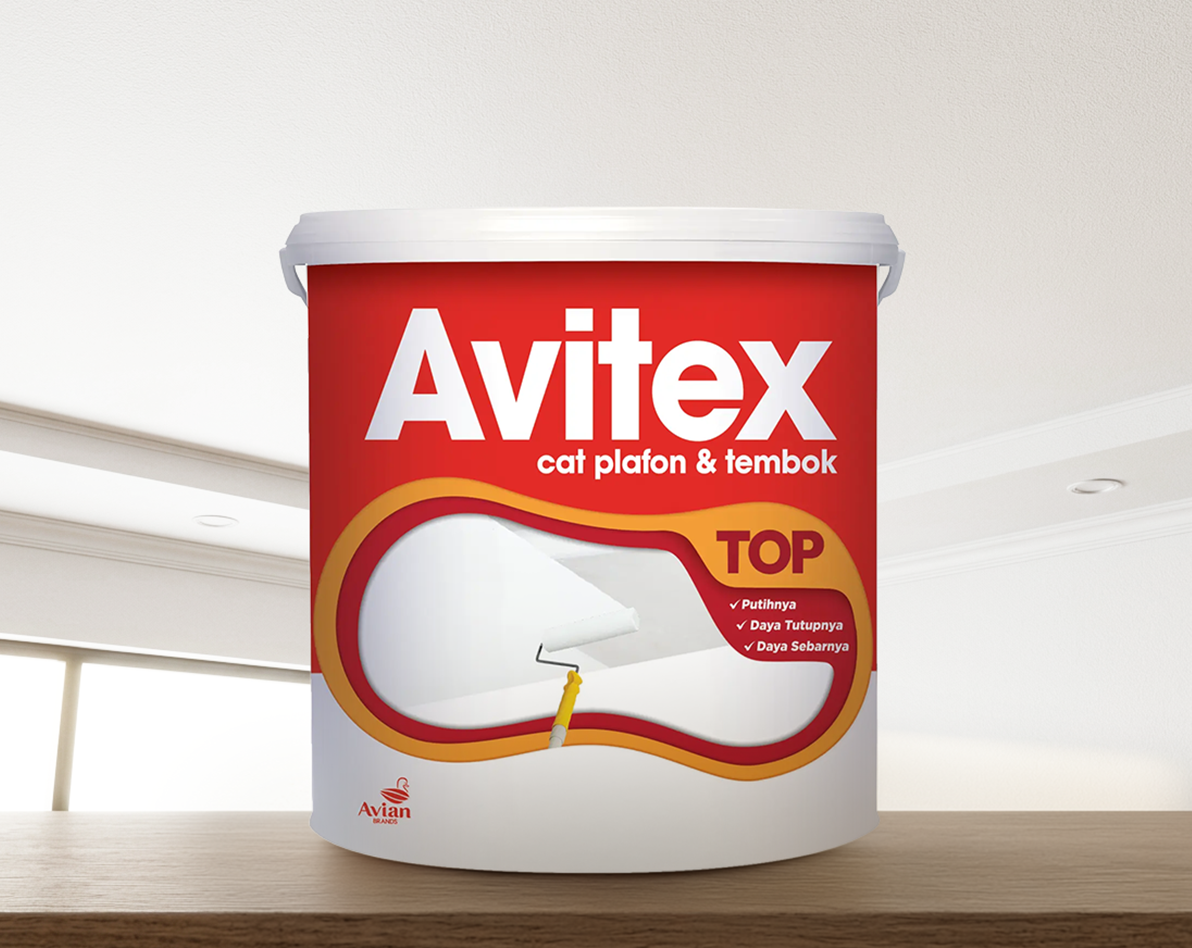
Advantages of Avitex TOP from Avian Brands:
-
Clean White Color: Presents a white color that is harmonious and easy to pair with various room styles and surrounding wall color schemes.
-
Low-Spatter Formula: Designed to be comfortable to apply to overhead surfaces without dripping much or dirtying the surrounding area.
-
Easy to Apply: Facilitates the ceiling painting process, even for DIY work at home without the help of a handyman.
-
Green Label Singapore Certified: Has met international environmentally friendly standards, making it safer to use in enclosed spaces.
With Avitex TOP, your home's ceiling looks clean and tidy without a troublesome painting process, while also supporting better indoor air quality for the whole family.